Headshot Wardrobe Guide for Women
What to Wear for a Headshot
The complete guide for women — colours, necklines, jewellery, and exactly what to wear for your industry, straight from the photographer’s chair.
Quick answer
For a women’s professional headshot: wear a solid, mid-to-deep tone (navy, charcoal, forest green, or burgundy), choose a V-neck or open collar to elongate your neck, add a fitted blazer for instant polish, keep jewellery minimal, and bring 2–3 outfit options. The goal is simple — your face is the hero, your outfit is the supporting cast.
Wardrobe is the number one thing my clients stress about before a headshot session. I hear it constantly — “I have no idea what to wear” or “I bought four things and I’m still not sure.” It’s one of the most common questions I get asked, and honestly? It’s a very reasonable thing to think carefully about.
Your outfit doesn’t just affect how you look — it affects how you feel in front of the camera. When you’re confident in what you’re wearing, it shows in your expression, your posture, and the energy you bring to the session. And all of that lands in your final images.
So let’s make this easy. Here’s everything you need to know, straight from someone who’s guided hundreds of women through this exact decision.
The colours that photograph best
Colour is the first decision — and the one with the biggest impact. The rule of thumb is solid, mid-to-deep tones. Here’s why: busy patterns and bright colours pull the viewer’s eye away from your face. Solid tones do the opposite — they frame your face rather than compete with it.
Navy
Classic, authoritativeCharcoal
Modern, versatileForest green
Fresh, confidentBurgundy
Rich, warmDusty purple
Creative, distinctiveSteel blue
Approachable, calmOne thing I always tell clients: wear what flatters your skin tone and eye colour, not just what’s “professional.” A warm burgundy on someone with deep brown eyes and golden skin tones will look stunning. A cool dusty blue might work better for someone with fairer skin and blue-grey eyes. Don’t just default to black and navy because they feel “safe.” Choose the colour that makes you look alive.
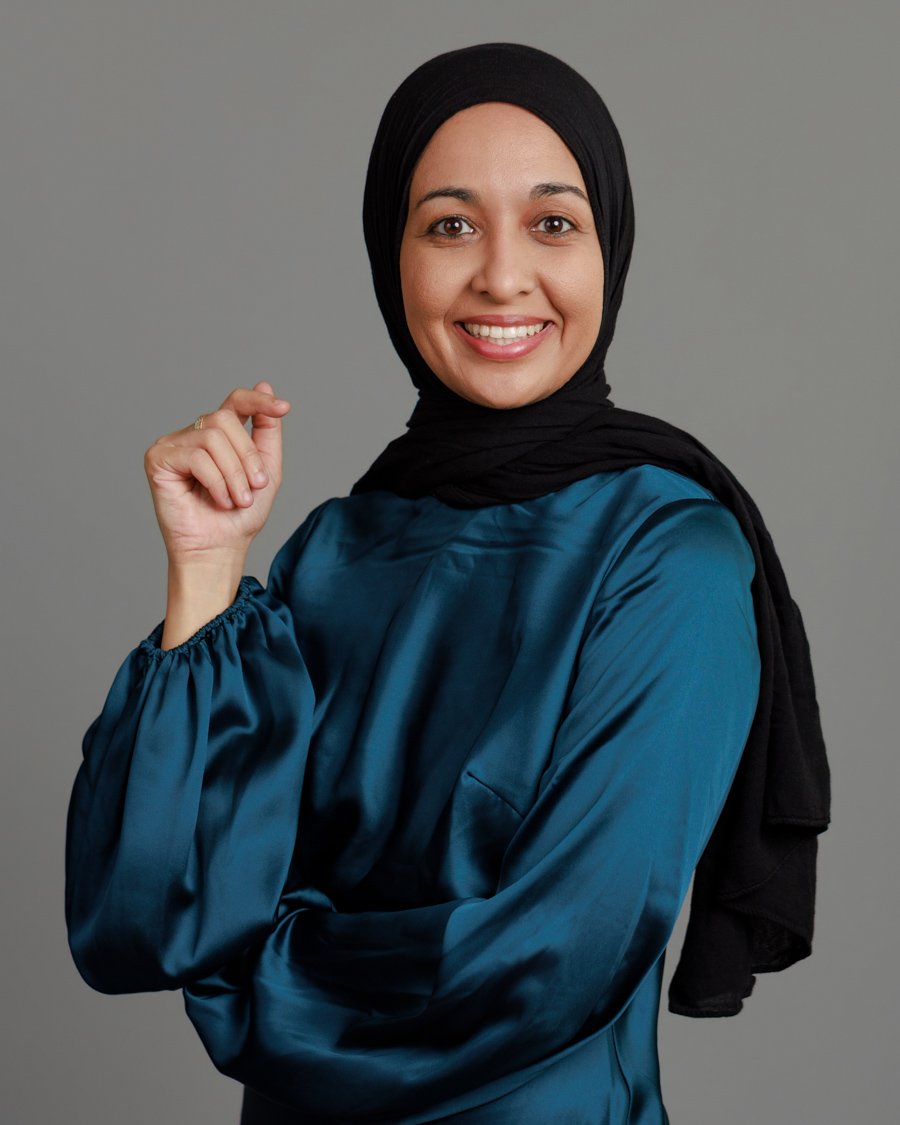
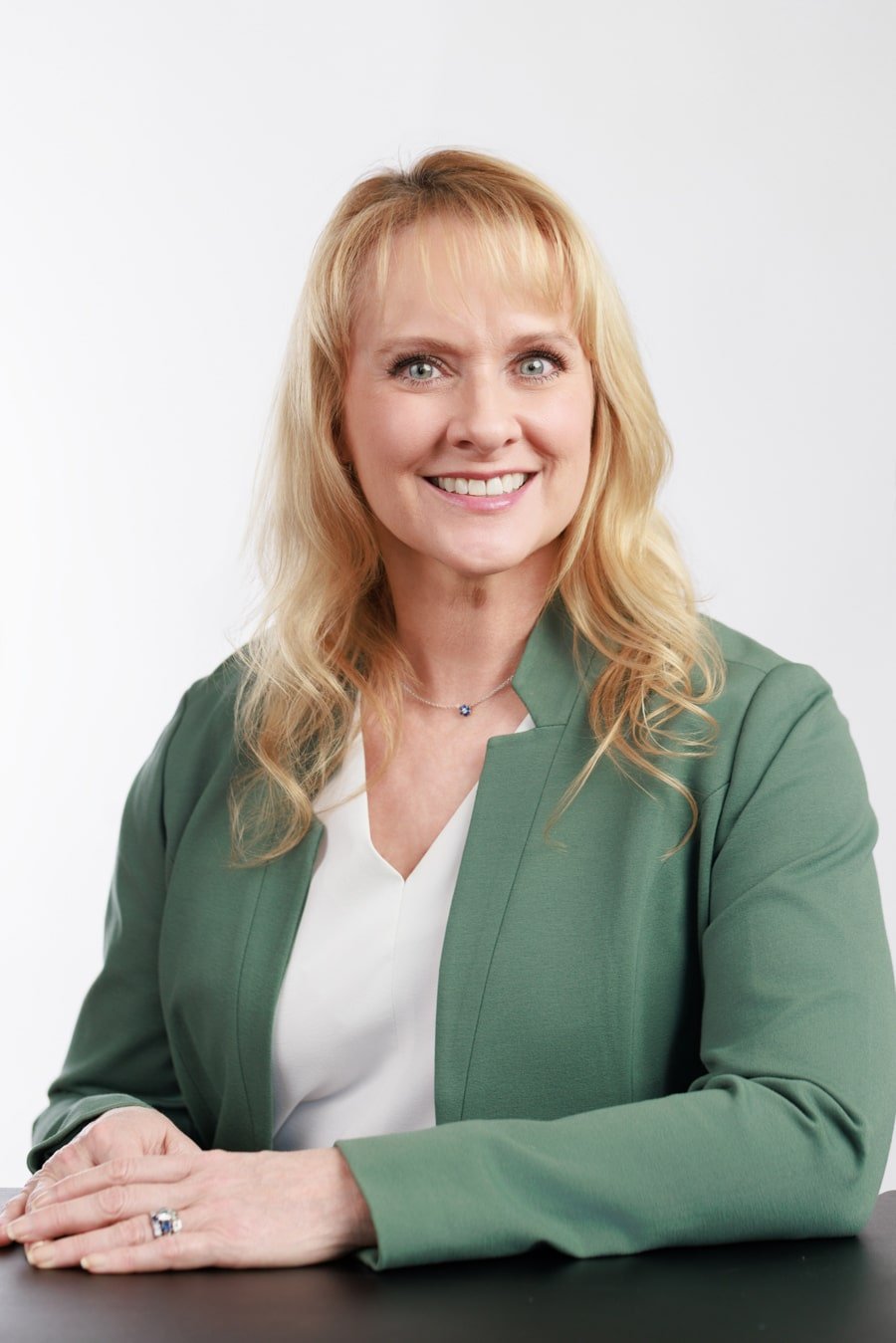

Solid, mid-to-deep tones in action — each outfit frames the face without competing with it.
That said — solid black is absolutely fine and looks great on most people. The concern with black is only when the background is also very dark, which can reduce separation. If you’re shooting on a dark background (which creates that slimming, editorial look), bring a slightly lighter option as your second outfit choice.
Necklines and fit — what actually matters
In a headshot, the neckline is the frame around your face. It’s one of the most important details — and one of the easiest to get right.
The most flattering necklines for headshots
| Neckline | Why it works | Best for |
|---|---|---|
| V-neck | Elongates the neck, draws the eye up toward the face | Most women, most industries |
| Scoop neck | Soft and open, very flattering without being too casual | Creative, tech, lifestyle brands |
| Open collar (button-down) | Polished but relaxed, works beautifully with or without a blazer | Business casual, entrepreneurs |
| Boat neck | Creates a clean horizontal line, emphasises collarbones | Classic professional looks |
| Jewel neck / mock neck | Minimal and sleek — works well on longer necks | Executives, minimalist style |
What to avoid: Very high, tight turtlenecks compress the neck visually and can feel stifling in a headshot. Super low plunging necklines draw the eye away from your face and can feel unprofessional depending on your industry. The sweet spot is open and clean — not restrictive, not distracting.
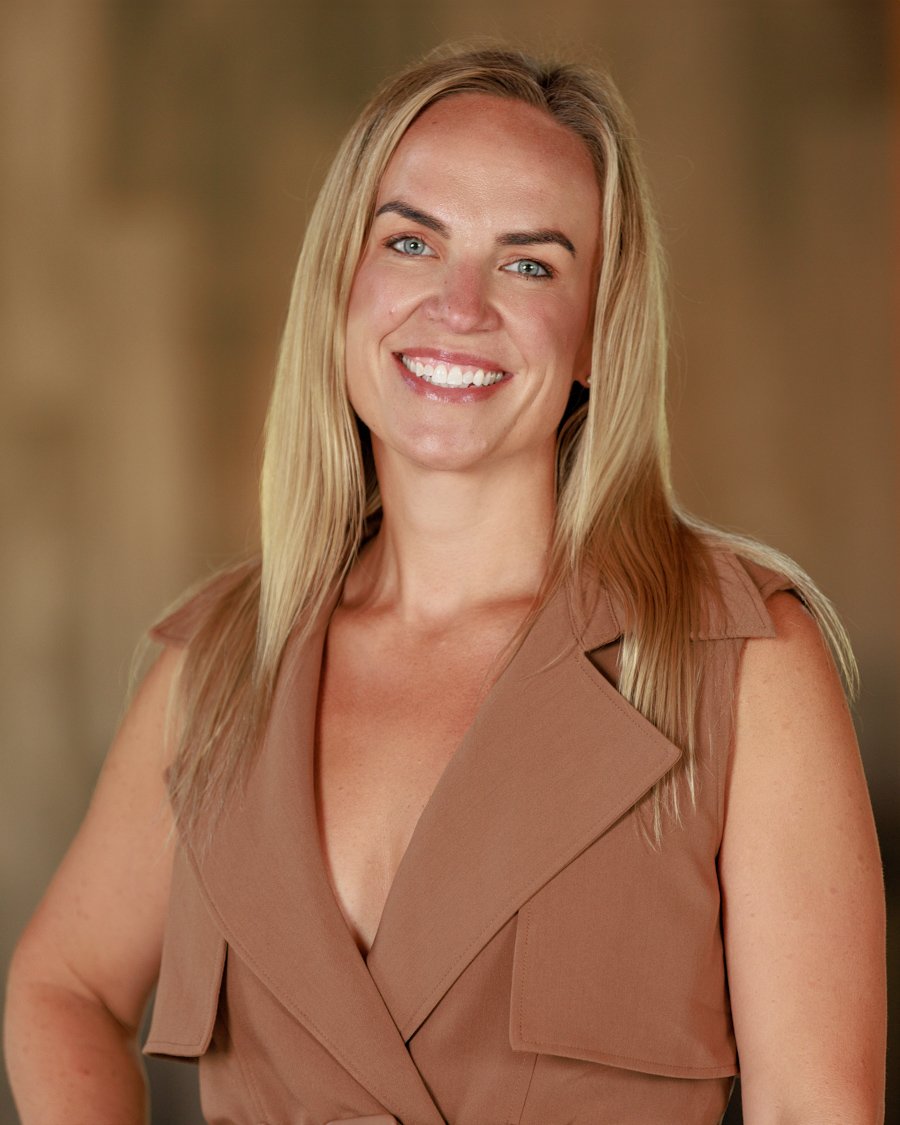
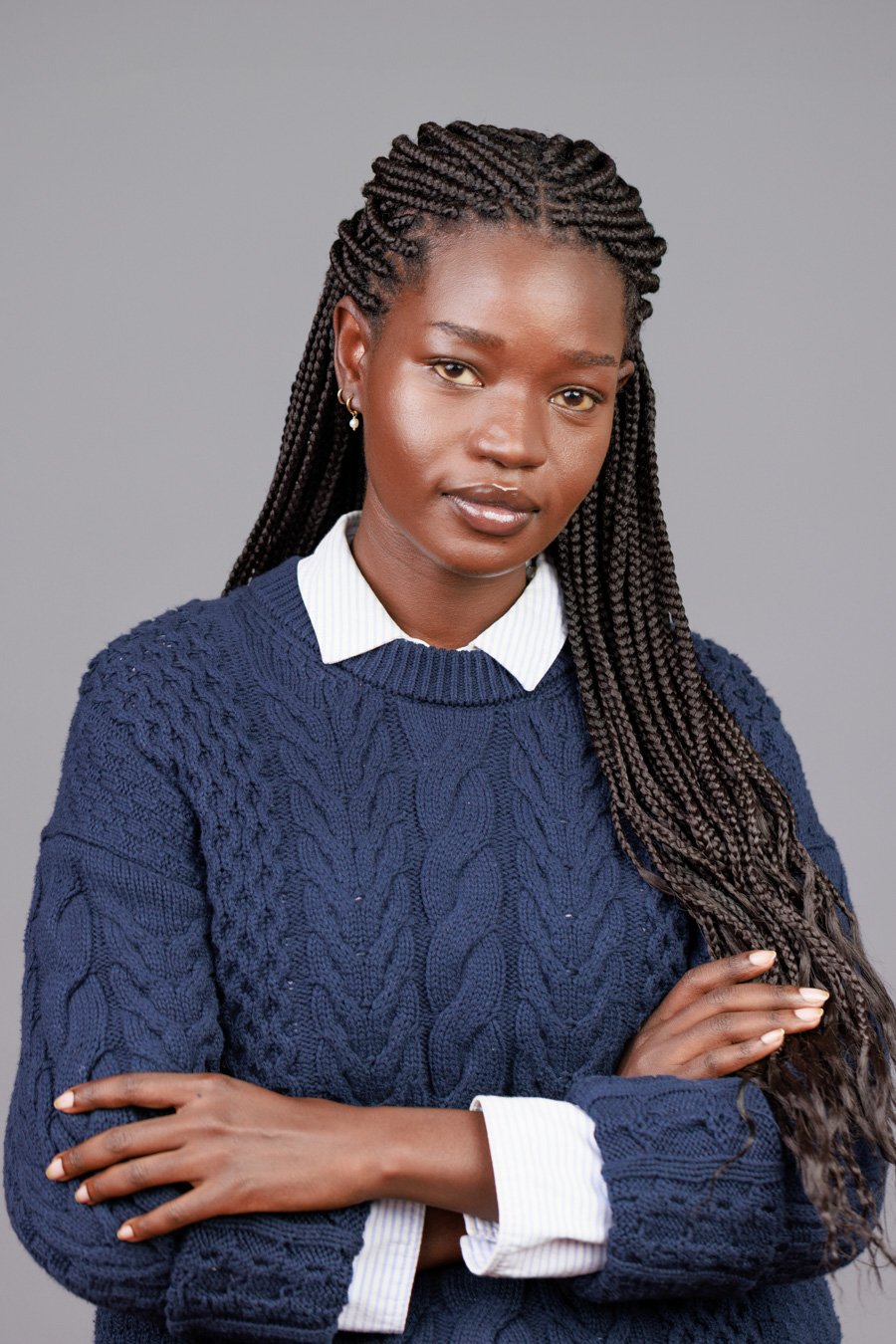
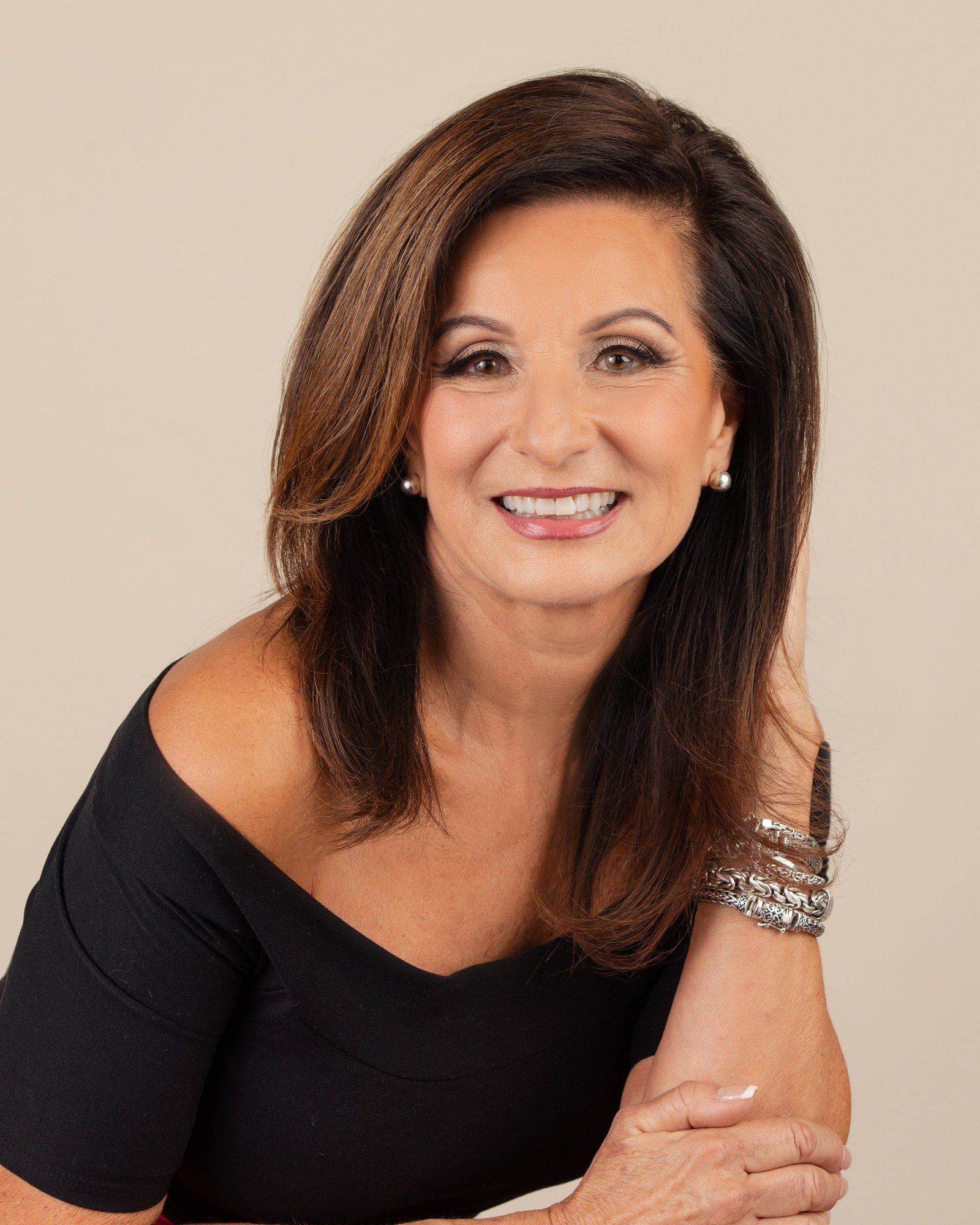
Open collars and clean necklines draw the eye up toward the face — exactly where you want it.
Fit is everything
The single most common wardrobe mistake I see? Clothes that don’t fit properly. Too tight creates pulling and awkward lines across the shoulders and chest. Too loose or oversized adds visual bulk and hides your shape. You want something that sits on your body, not squeezing it or floating away from it. If something needs a small alteration, do it before your session — it’s worth it.
Always do a seated check before your session. Sit down in what you’re planning to wear and look in the mirror. Does it pull? Does it bunch? Does the neckline gap? If something looks off seated, it’ll look off in your headshot.
“Your outfit is the frame, not the painting. The best headshot wardrobe is the one you stop thinking about the moment the shutter clicks — because it just feels right.”
Why a blazer is almost always the right call
If I could give every client one universal piece of wardrobe advice, it would be: bring a well-fitted blazer. Here’s why it works so consistently.
A blazer creates clean, structured shoulder lines — and shoulders are the visual anchor of a headshot. It communicates competence and confidence without saying a word. It works across almost every industry (yes, even creative ones — an unstructured linen blazer reads very differently from a sharp corporate one). And practically speaking, it gives you a second “look” in the same session without changing your entire outfit — just take the blazer off for some frames and you’ve got two distinct options.
The key is fit. A blazer that’s too boxy or too long defeats the purpose. Look for one that sits at or just below the hip, pulls cleanly across the shoulders, and doesn’t have excess fabric in the back. Single-button styles tend to be the most versatile. And yes — navy, charcoal, camel, forest green, and deep burgundy all work beautifully.

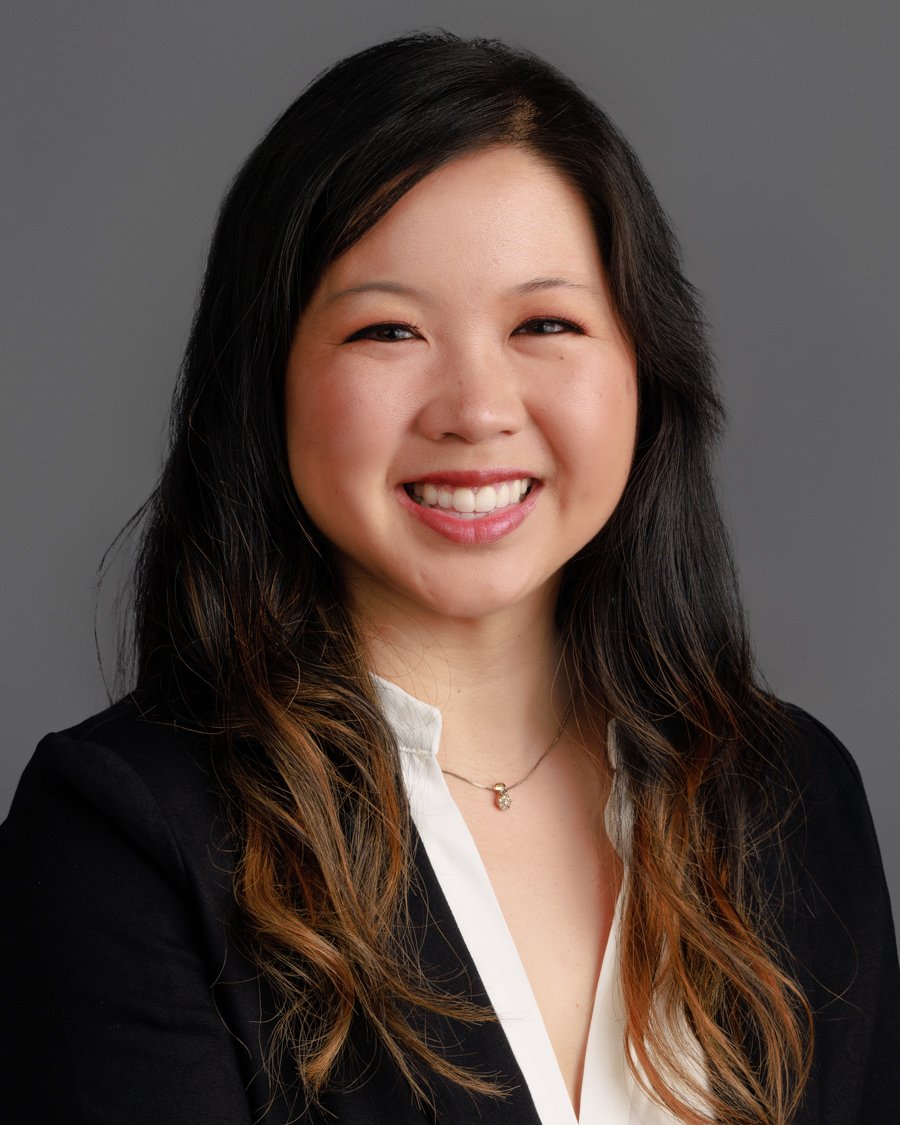
A well-fitted blazer creates clean shoulder lines and instantly communicates confidence and credibility.
What to wear by industry
Not all headshots serve the same purpose. An attorney’s LinkedIn photo needs to communicate something different from a life coach’s about page. Here’s a breakdown by profession:
Law / Finance / Banking
Corporate authority
- Sharp blazer — navy, charcoal, or black
- Structured button-down or silk blouse underneath
- Minimal jewellery — small studs, fine necklace
- Classic, polished, nothing trend-driven
- Hair neatly styled, not overly formal
Tech / Startup / Product
Smart casual confidence
- Open collar or fitted crew neck in a solid tone
- Unstructured blazer optional — adds polish without stuffiness
- Avoid anything too formal — it can read as out of touch
- Slightly bolder colour choices work here
- Clean, modern — think polished but relaxed
Real Estate / Luxury Sales
Warm professional presence
- Elegant blazer — camel, burgundy, or soft jewel tones
- Blouse or structured top that feels approachable
- Slightly warmer colour palette than corporate
- One tasteful accessory (necklace or earrings) is fine
- Hair and makeup polished — this client expects luxury
Healthcare / Medical
Trust and competence
- Solid scrubs (if clinical context) or business casual
- White coat over blouse if that’s your identity
- Soft, trustworthy tones — blue, navy, slate, forest green
- Clean and approachable — not intimidating
- Minimal accessories — watch or simple studs
Creative / Marketing / Design
Personality-forward
- More room for a signature colour or interesting texture
- Structured top with personality — not a plain corporate blazer
- Bold earrings or a statement necklace can work here
- Something that reflects your brand aesthetic
- Still avoid patterns — a solid bold colour beats a print
Coaching / Consulting / Speaking
Warm authority
- Blazer or structured wrap top in a warm, approachable tone
- Slightly more relaxed than corporate, more polished than casual
- Colours that feel warm and energising — dusty rose, terracotta, sage
- Jewellery that feels intentional and personal
- You’re selling trust AND relatability — balance both
Jewellery — the less-is-more rule
Jewellery in a headshot is entirely about not being distracting. The moment someone looks at your headshot and notices your earrings before they notice your eyes, the jewellery has done the wrong job.
Works well
- Small stud or simple hoop earrings
- A delicate pendant necklace
- A classic watch (adds confidence and intentionality)
- A simple bangle or thin bracelet (if in frame)
- One piece that feels like you — worn intentionally
Avoid
- Large, dangly, or chandelier earrings
- Statement necklaces that compete with your face
- Reflective or overly shiny pieces (studio light creates glare)
- Multiple layered necklaces — creates visual noise
- Anything you’d have to think about during the session
One exception: if jewellery is a core part of your personal brand — you’re a jewellery designer, stylist, or your signature look includes a bold piece — then absolutely wear it. The rule is intentional, not invisible.
Before your session — the prep checklist
Steam or iron everything. Creases that look minor at home look major under studio lights. Do this the night before, not the morning of.
Bring 2–3 options. You don’t need a full wardrobe change — just enough for two distinct looks. A blazer over a blouse, then the blouse alone, is already two looks.
Get your hair trimmed a week before — not the day of. Fresh cuts can look sharp and unnatural. A week out, your hair has settled but still looks intentional.
If you’re wearing makeup, keep it consistent with how you normally look. The goal is your best self, not a transformed version of yourself. Heavy contouring or very dramatic looks can read as filtered in photos.
Avoid spray tans. They often photograph patchy under studio lighting, especially if they’re fresh. Your natural skin tone always photographs better.
Wear your outfit for 20 minutes before the session. Sit in it. Move in it. Make sure nothing bunches, pulls, or creases in a way you don’t love.
Frequently asked questions
Wondering what to bring beyond your outfit? Read our full headshot session prep guide or browse the headshot gallery to see how different wardrobe choices photograph in real sessions.
Ready to book your session?
Every session includes wardrobe guidance, posing direction, and retouching — so you walk out with images you’re genuinely proud to use.
Book your headshot session